

Gear for Scandinavia
Rain, mosquitoes, cold nights, light nights and winter: what you really need
Home › Gear
Gear
🎒 What to bring to the north
Scandinavia calls for different gear than a summer holiday on a campsite in southern Europe: the weather changes, in the far north it hardly gets dark in summer and hardly gets light in winter. Below you will find what you need per topic, with the official source wherever rules, dates or safety are involved. The page also works perfectly without the shop buttons.
Researched by Arjan from Zuidlaren, so you don’t have to · Sources: Yr (Norwegian weather service with NRK), SMHI (Swedish weather service), Ilmatieteen laitos (Finnish Meteorological Institute) · updated on 31 October 2026 · About this site
- Rain clothing and layers for changeable weather
- Mosquitoes, midges and ticks: what really helps
- Camping: cold nights, the right to roam and light nights
- Winter: clothing, tyres and a cabin
- eSIM and other things for the road
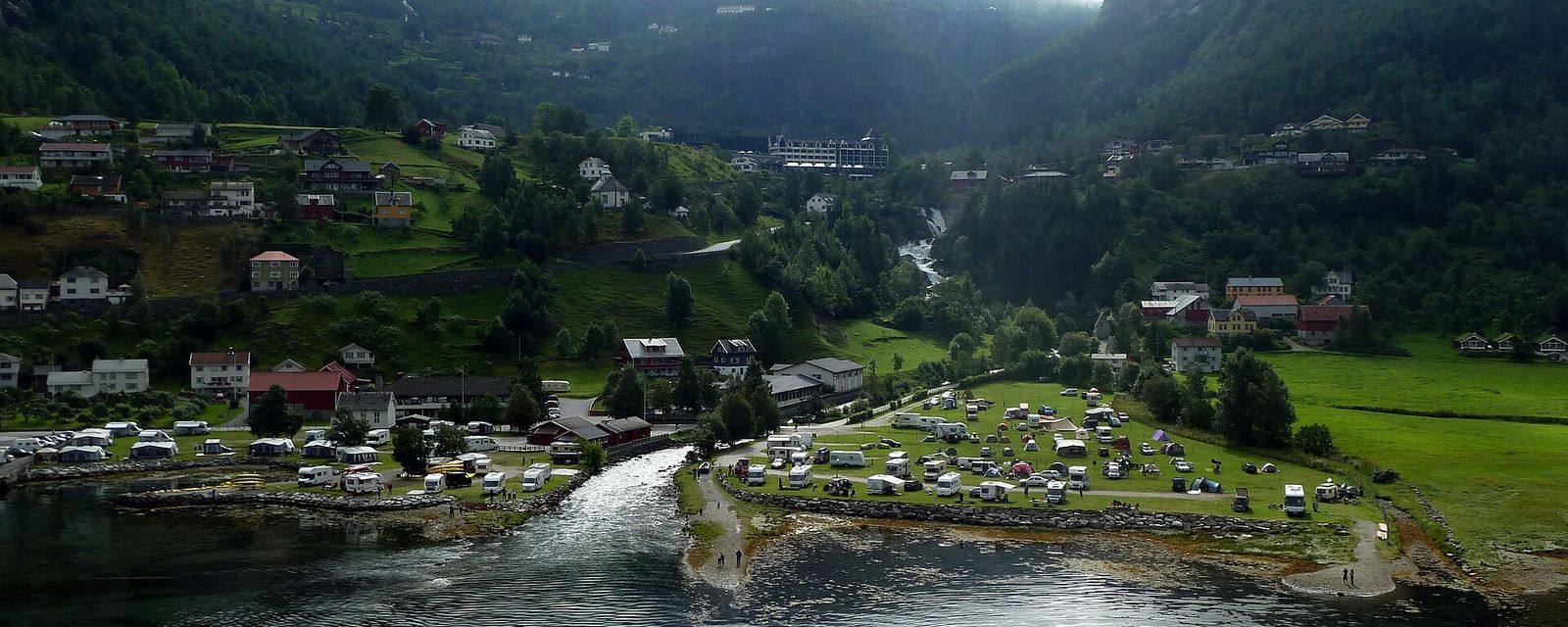
Header photo: giggel · CC BY 3.0 (cropped) · Photo credits
Choose your trip
🧭 Which gear suits your trip?
| I expect rain and wind | Rain and layers |
|---|---|
| I am going north, where there are mosquitoes and midges | Mosquitoes and midges |
| I am camping with a tent | Camping |
| I am going far north in June or July | Midnight sun and sleep mask |
| I am travelling in winter | Winter |
| I am driving myself and want to stay reachable | On the road: eSIM, power and safety |
Rain and layers
🌧️ Rain clothing and layers

In Scandinavia you can get wet on any day of the year, and on Norway’s west coast often in summer too. The layering system usually works well: you put layers on or take them off one by one.
| Layers | A base layer that moves moisture away, a warm mid layer (fleece or wool) and a waterproof, windproof outer layer. (Our tip, not a rule.) |
|---|---|
| Rain jacket and trousers | For children, choose a rain suit they can easily get in and out of themselves. Keep a dry spare set in the car or tent. (Our tip, not a rule.) |
| Shoes and socks | Waterproof walking shoes or boots, plus a spare pair of dry socks for every day. (Our tip, not a rule.) |
| Weather forecast | Use the national weather service: Yr (Norway) (source: Yr (Norwegian weather service with NRK)), SMHI (Sweden) (source: SMHI (Swedish weather service)), Ilmatieteen laitos (Finland) (source: Ilmatieteen laitos (Finnish Meteorological Institute)), DMI (Denmark) (source: DMI (Danish Meteorological Institute)) and Veðurstofa Íslands (Iceland) (source: Veðurstofa Íslands (Icelandic Met Office)). |
Mosquitoes and midges
🦟 Mosquitoes, midges and ticks

Not every summer is the same, but in the north there are sometimes many biting insects. In Norwegian, blackflies are called knott and biting midges sviknott; both bite or sting.
| When | According to Metsähallitus the insect season usually starts around Midsummer and lasts until early or mid-August; a cold June may delay it. In Kilpisjärvi it is in July, in Utsjoki from mid-June to early August (source: Luontoon.fi (Metsähallitus): seasons in Northern Finland). |
|---|---|
| Where | More mosquitoes are found in mires and humid areas; windy weather on the fells keeps them away (source: Luontoon.fi (Metsähallitus): seasons in Northern Finland). In Lapland there are sometimes very many biting and stinging insects, in the north especially in July and August (source: Luontoon.fi (Metsähallitus): insect pests). |
| Clothing | Where there are large numbers of knott and sviknott, NHI.no says fully covering clothing and a hat with fine-mesh netting can be sensible, with no openings (buttonholes, wide trouser legs) where they can crawl in. Light clothing is stung less than dark (source: NHI.no: blackflies and mosquitoes (knott, mygg)). Sviknott are small: most are under 1.5 mm (source: NHI.no: blackflies and mosquitoes (knott, mygg)). |
| Repellent | The Norwegian Institute of Public Health advises a repellent with DEET (at least 20%) or icaridin on skin and clothing, not on wounds; adults apply it to children and make sure children do not get it on their hands or in their eyes (source: Folkehelseinstituttet: travel advice on insect bites). Always read the instructions. A mosquito net over a bed or pram also keeps them out (source: NHI.no: blackflies and mosquitoes (knott, mygg)). |
| Ticks | Wear long trousers tucked into your socks, choose light clothing so you can spot ticks, and check yourself afterwards. Remove an attached tick within a day; the risk of Lyme disease is then low (source: Folkehelseinstituttet: ticks). A vaccine against TBE exists; the Swedish Folkhälsomyndigheten says who it is recommended for (source: Folkhälsomyndigheten: vaccination against TBE). |
| Diseases | In Norway, mosquitoes, knott and sviknott are not known to transmit dangerous diseases, but they are a nuisance for most people (source: NHI.no: blackflies and mosquitoes (knott, mygg)). |
Camping
⛺ Camping: tent, cold nights and the right to roam

A good night starts with a tent that can handle wind and a sleep system for the coldest night, not the average one.
| Cold nights | Even in summer, nights in the north can be chilly (source: Visit Norway: the midnight sun). Choose a sleeping bag for the coldest night you expect, insulate yourself from the ground with a sleeping mat and bring an extra layer to sleep in. |
|---|---|
| Tent | Choose a tent that can handle wind, with extra-long pegs for loose or stony ground and a dark inner tent. Pitch it with the narrow end into the wind and ventilate against condensation. (Our tip, not a rule.) |
| Right to roam | Norway: in the countryside (utmark) you may pitch a tent at least 150 m from the nearest inhabited house or cabin, for up to 2 nights in the same place (longer in the high mountains or far from buildings) (source: Miljødirektoratet: tent and hammock). Sweden: under allemansrätten you may stay a single night or so in a tent almost anywhere (source: Naturvårdsverket: the right of public access (allemansrätten)). Finland: see the rules from Metsähallitus (source: Luontoon.fi (Metsähallitus): everyman's rights). Denmark and Iceland have different rules, see our guide. |
| Fire | In Norway, between 15 April and 15 September you may only make a fire in woods and fields where it obviously cannot cause a fire (source: Miljødirektoratet: making a fire). Local rules can be stricter. |
| Light | A headlamp keeps your hands free when pitching the tent in the evening and for a night-time toilet visit. (Our tip, not a rule.) |
Midnight sun
🌞 Midnight sun and sleep mask

North of the Arctic Circle the sun does not set for weeks in summer. It is beautiful, but children (and parents) often sleep worse because of it.
| Periods in Norway | North Cape 14 May–29 July, Tromsø 20 May–22 July, Lofoten 28 May–14 July (source: Visit Norway: the midnight sun). |
|---|---|
| Periods in Sweden | Abisko 25 May–18 July, Kiruna 28 May–14 July (source: Visit Sweden: the midnight sun (figures from SMHI)). |
| Sleeping | A sleep mask for everyone, a dark inner tent and a fixed evening routine help make the nights feel like nights. (Our tip, not a rule.) |
| Cold and light | Even under the midnight sun, summer nights in the north can be chilly (source: Visit Norway: the midnight sun). |
Winter
❄️ Winter: staying warm and driving safely

In winter you need different clothing and different tyres in Scandinavia than in summer. For your car, each country has its own rules.
| Clothing | A base layer of wool or synthetic fibre, a warm mid layer and a windproof outer layer; plus gloves, a hat and warm socks. (Our tip, not a rule.) |
|---|---|
| Tyres Norway | In Nordland, Troms and Finnmark the minimum is 3 mm tread from 16 October to 30 April. The summer period (minimum 1.6 mm) runs from the first Sunday after Easter Monday until 1 November, so elsewhere the winter period differs from year to year (source: Statens vegvesen: tyres and chains). |
| Tyres Sweden | In wintry road conditions (snow, ice, slush or frost) from 1 December to 31 March, winter tyres or equivalent equipment are required; tread at least 3 mm (source: Transportstyrelsen: winter tyres). |
| Tyres Finland | From 1 November to 31 March you must use winter tyres if weather or road conditions require it; tread at least 3 mm (source: Traficom: summer and winter tyres). |
| Tyres Denmark | Færdselsstyrelsen recommends switching to winter tyres in good time when there is a risk of snow, ice or slush; tread must be at least 1.6 mm (source: Færdselsstyrelsen: tyres). |
| Overnight | A cabin is often the warmest choice in winter. See our guide to winter camping for what that means in practice. (Our tip, not a rule.) |
On the road
📶 On the road: eSIM, power and safety

If you want to stay reachable on the road, sort out internet and power beforehand. Even around elk signs it helps to have a map and numbers to hand.
| Internet | In the 27 EU countries (so also Denmark, Sweden and Finland) and in Iceland, Liechtenstein and Norway, “Roam like at Home” applies automatically (source: European Commission: roaming). Check with your provider what your plan covers exactly, for example on ferries. |
|---|---|
| Offline maps | Download maps beforehand, because coverage is not good everywhere in sparsely populated areas. (Our tip, not a rule.) |
| Emergency number | 112 is the European emergency number in the EU countries (source: European Commission: 112). For Norway and Iceland, look up the local emergency numbers beforehand. |
| Power | A power bank and a car charger keep your phone and navigation running. See also our guide to internet and power on the campsite. (Our tip, not a rule.) |
FAQ
Frequently asked questions
What is the minimum I should bring camping in Scandinavia?
Rain clothing in layers, a sleeping bag for cold nights, a sleep mask for light nights and something against mosquitoes. More in our camping guides.
May I wild camp anywhere?
Not everywhere. Norway, Sweden and Finland have a right to roam with rules; Denmark and Iceland have different rules. Read our guide to wild camping and the right to roam.
Are mosquitoes in Scandinavia dangerous?
In Norway, mosquitoes and knott are not known to transmit dangerous diseases, but they are a nuisance (source: NHI.no: blackflies and mosquitoes (knott, mygg)). Ticks can transmit diseases (source: Folkehelseinstituttet: ticks).
Do I need an eSIM?
In the EU and in Norway and Iceland, “Roam like at Home” applies (source: European Commission: roaming). An eSIM can be an extra option, but first check what your own plan covers.
Accountability
📚 Sources
Every number and every rule on this page comes from a source. Here they all are in one place, checked on 31 October 2026. Tips of our own are marked “Our tip”. We do not quote prices.
View 23 sources
- yr.no: Yr (Norwegian weather service with NRK)
- smhi.se: SMHI (Swedish weather service)
- en.ilmatieteenlaitos.fi: Ilmatieteen laitos (Finnish Meteorological Institute)
- dmi.dk: DMI (Danish Meteorological Institute)
- en.vedur.is: Veðurstofa Íslands (Icelandic Met Office)
- luontoon.fi: Luontoon.fi (Metsähallitus): seasons in Northern Finland
- luontoon.fi: Luontoon.fi (Metsähallitus): insect pests
- nhi.no: NHI.no: blackflies and mosquitoes (knott, mygg)
- fhi.no: Folkehelseinstituttet: travel advice on insect bites
- fhi.no: Folkehelseinstituttet: ticks
- folkhalsomyndigheten.se: Folkhälsomyndigheten: vaccination against TBE
- visitnorway.com: Visit Norway: the midnight sun
- miljodirektoratet.no: Miljødirektoratet: tent and hammock
- naturvardsverket.se: Naturvårdsverket: the right of public access (allemansrätten)
- luontoon.fi: Luontoon.fi (Metsähallitus): everyman's rights
- miljodirektoratet.no: Miljødirektoratet: making a fire
- visitsweden.com: Visit Sweden: the midnight sun (figures from SMHI)
- vegvesen.no: Statens vegvesen: tyres and chains
- transportstyrelsen.se: Transportstyrelsen: winter tyres
- traficom.fi: Traficom: summer and winter tyres
- fstyr.dk: Færdselsstyrelsen: tyres
- digital-strategy.ec.europa.eu: European Commission: roaming
- digital-strategy.ec.europa.eu: European Commission: 112